

Skip to content

Insights

Good Deal, Wrong Lender: What a Bank Decline Really Means

Banks don't decline deals because the deals are bad. They decline deals that fall outside what they're set up to do.

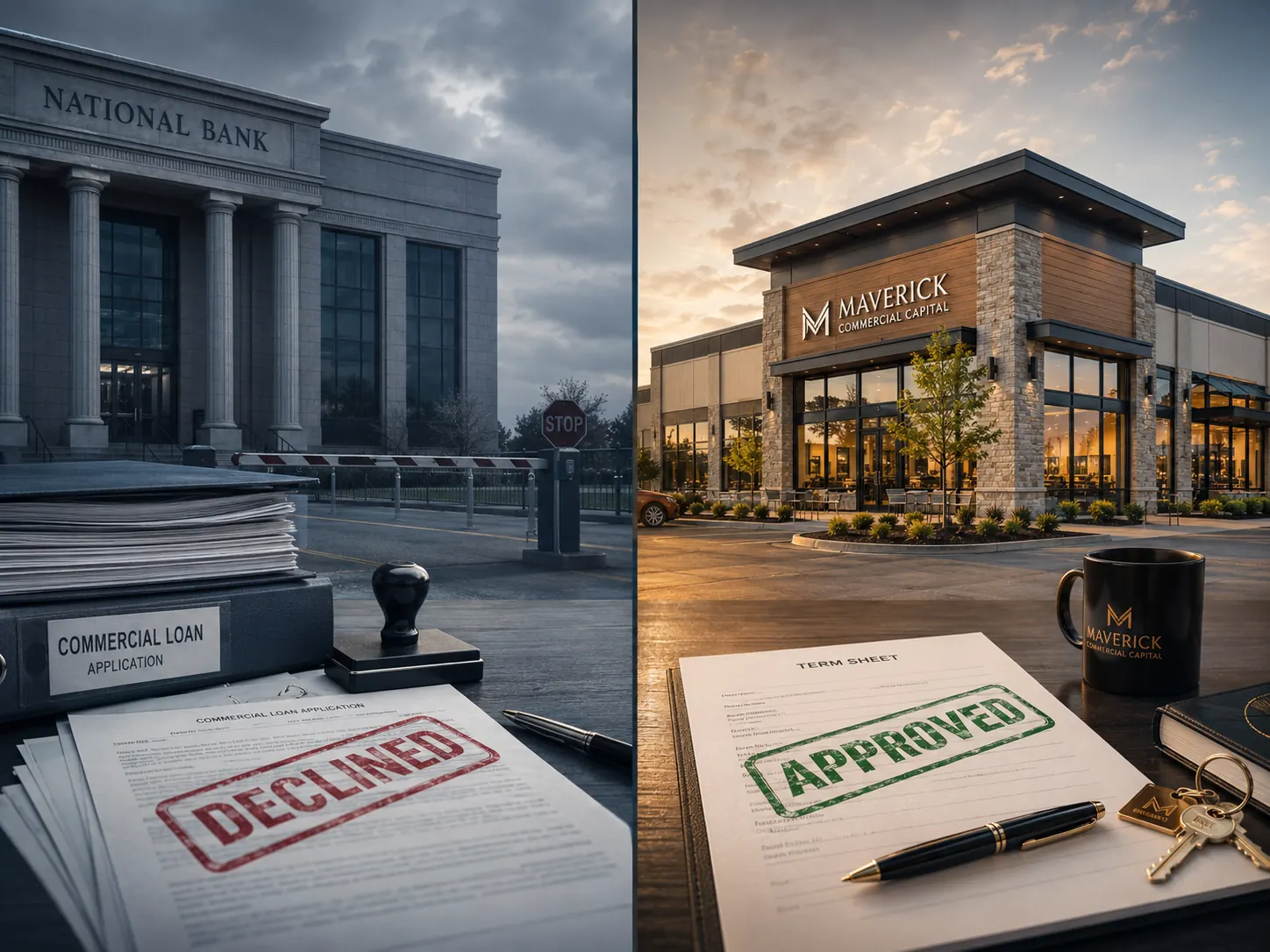
The same file twice: a loan application stamped declined outside a grey bank, and a term sheet stamped approved on a lender's desk.

What a bank is actually built for

Regulated lenders operate to defined credit policies, concentration limits and documentation standards. Those constraints are the reason bank money is cheap. They are also the reason it doesn't fit everything.

A property type outside the bank's appetite, a borrower whose returns don't reflect their economics, an asset that isn't stabilised, a timeline shorter than the process — each of these produces a decline that says nothing about whether the transaction makes money.

Read the reason, not the verdict

"Insufficient documentation" means the file didn't answer a question. "Property type" means the deal was never going to fit. "Cash flow" may mean the property, or it may mean a global analysis that swept in unrelated holdings.

Those lead to completely different next moves. One is a file problem, one is a lender-selection problem, one is a structure problem. Treating all three as the same rejection wastes the most useful information you're going to get.

The mistake that follows

After a decline, the common response is to take the same file to the next bank and hope for a different answer. If the reason was structural, the outcome will be identical — and each attempt costs weeks the transaction may not have.

The other common response is to abandon a sound deal. Both come from reading a decline as a verdict on the property instead of a description of one lender's parameters.

What to do with the file

Everything you assembled for the bank is still useful. The rent roll, the operating statements, the scope of work, the entity documents and the title work all transfer to whoever underwrites it next.

The question to ask the next lender is not "will you approve this" but "does this fit what you do, and can you close by the date I have". That answer arrives much faster than an application does.

General information about commercial real estate financing. It is not legal, tax, accounting or investment advice, and it does not describe the terms available on any particular transaction.

A good deal shouldn't die waiting on a bank.

Tell us about the transaction. You'll get a straight answer about whether it fits — including a fast no if it doesn't.

When Banks Stall, Maverick Moves.

Submitting deal information does not constitute an application for credit. Nothing here is an approval, a denial, a commitment to lend, or an offer of credit. All financing is subject to underwriting, third-party reports and final credit approval.

Get My Deal Done